The Gold Coast is known for its beautiful beaches, vibrant nightlife, and picturesque hinterland, but it’s also no stranger to severe storms. High winds, heavy rainfall, and lightning can all cause damage to trees, putting both property and people at risk.
In this article, we will discuss the importance of storm damage tree removal on the Gold Coast and how to go about it safely and effectively. Whether you’re a homeowner, business owner, or just concerned about the health of the local environment, this information is essential for protecting your property and maintaining the natural beauty of the Gold Coast.
The common causes of storm damage to trees include high winds, heavy rainfall, and lightning. High winds can cause branches to break or even uproot entire trees. Heavy rainfall can weaken the soil and make trees more susceptible to falling. Lightning can strike trees directly, causing significant damage. Other factors that can contribute to storm damage include hail. All of these factors can combine to create hazardous conditions for trees and potentially cause damage. It’s important to be aware of the potential causes of storm damage and take steps to protect your trees before a storm hits.
Consequences of storm damage
Storm damage to trees can have serious consequences, both for the trees themselves and for surrounding property.
Some of the potential consequences of storm damage to trees include:
Falling branches: During a storm, high winds can cause branches to break and fall, potentially damaging nearby property or even injuring people.
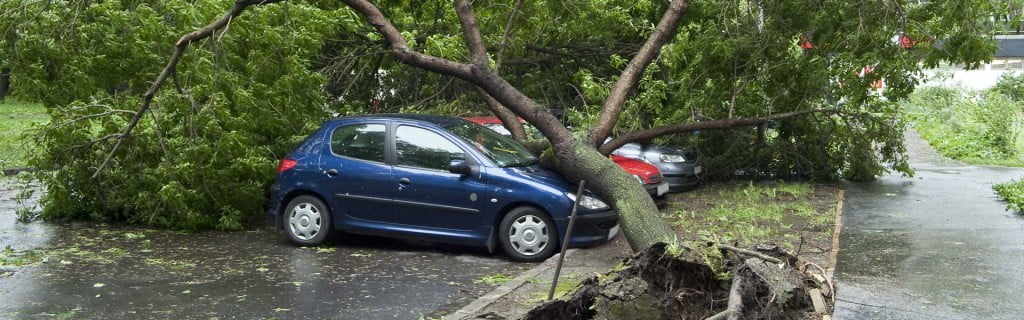
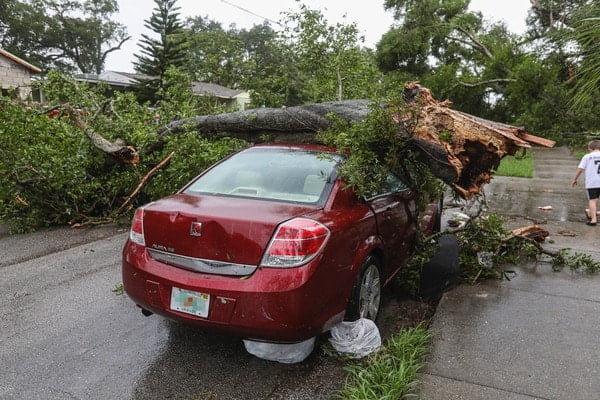
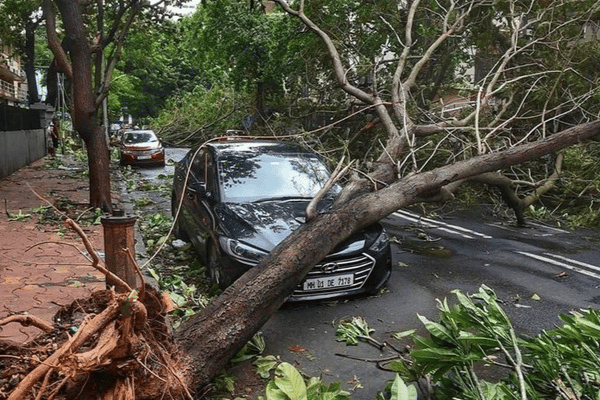
Uprooted trees: In extreme cases, storm winds can cause entire trees to uproot and fall, which can be very dangerous and cause significant damage to buildings and other structures.
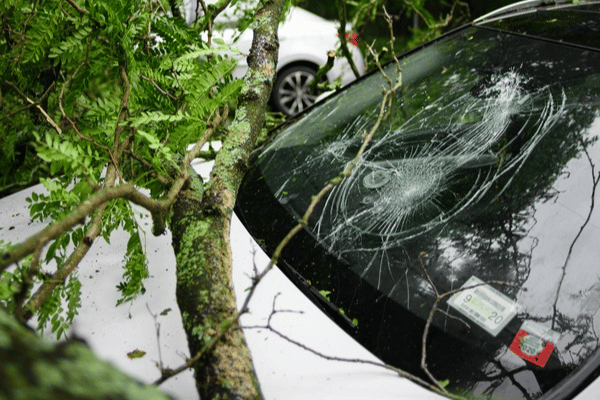
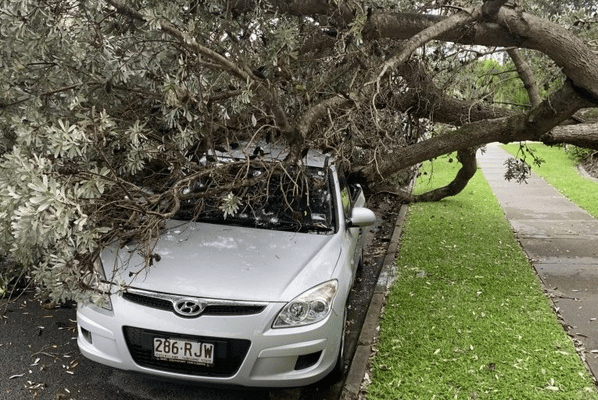
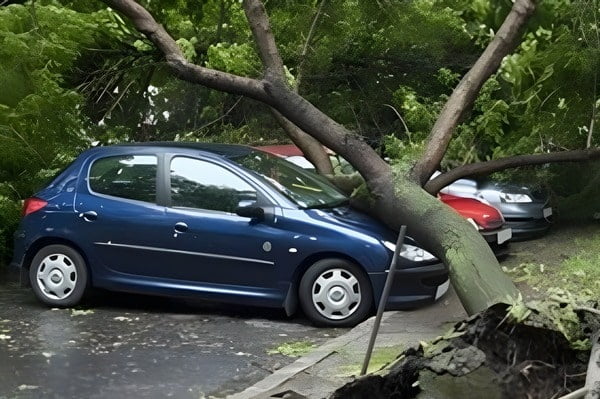
Damage to property: Storm damage to trees can also cause damage to nearby buildings, cars, and other property. For example, falling branches or an uprooted tree can crush a car or damage the roof of a building.
Debris: After a storm, fallen branches and other debris can litter yards and streets, creating a hazard for pedestrians and vehicles.
Signs of storm damage
There are several signs that a tree may have been damaged in a storm, including:
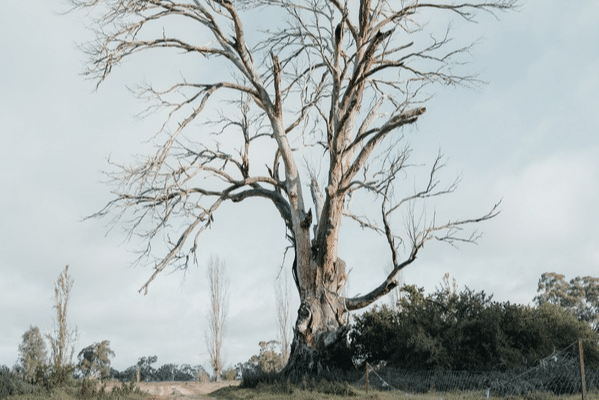
Cracks in the trunk: A tree that has been damaged in a storm may develop cracks in its trunk, which can be visible from a distance. These cracks can weaken the tree and make it more susceptible to falling.
Broken branches: After a storm, it’s not uncommon to see broken branches on the ground or hanging from trees. This is a clear sign that the tree has been damaged and may be at risk of falling.
Leaning trees: In some cases, storm winds can cause a tree to lean, which can make it unstable and more likely to fall. If you notice that a tree is leaning after a storm, it’s important to assess the situation and determine whether it needs to be removed.
Other signs: In addition to the above signs, there are other indicators that a tree may have been damaged in a storm. For example, the tree may have lost a significant number of leaves, or the leaves may be wilted or discoloured. The tree may also be producing less fruit or other growth than usual. If you notice any of these signs, it’s a good idea to have a professional assess the tree and determine whether it needs to be removed.
Tree removal after a storm
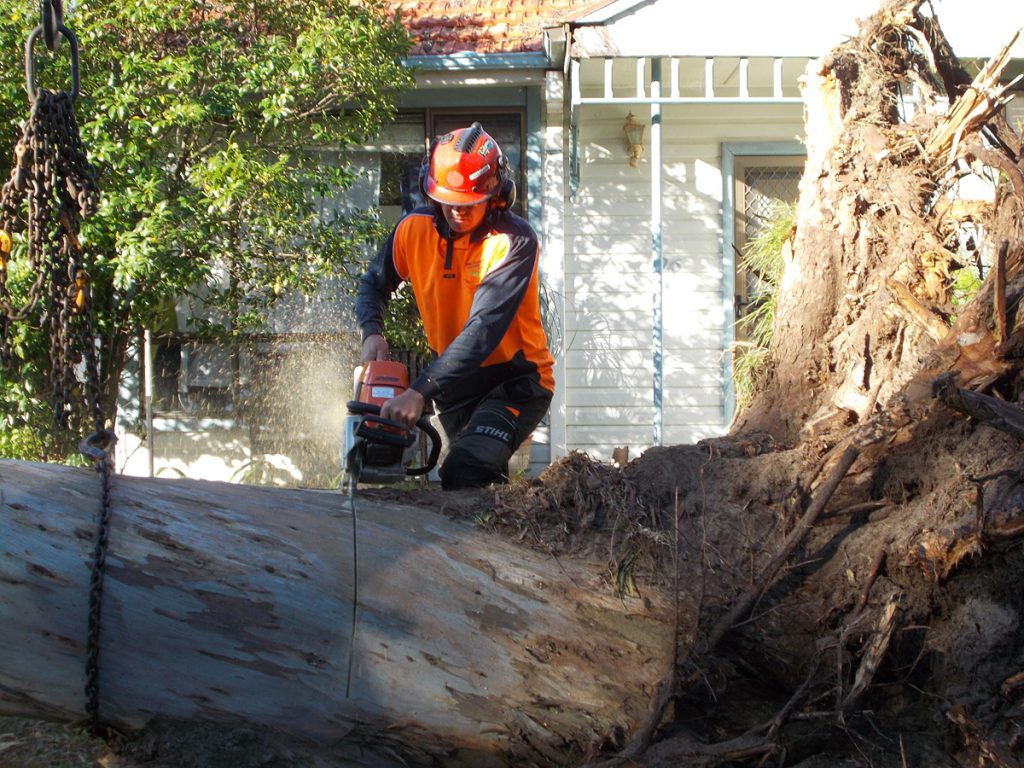
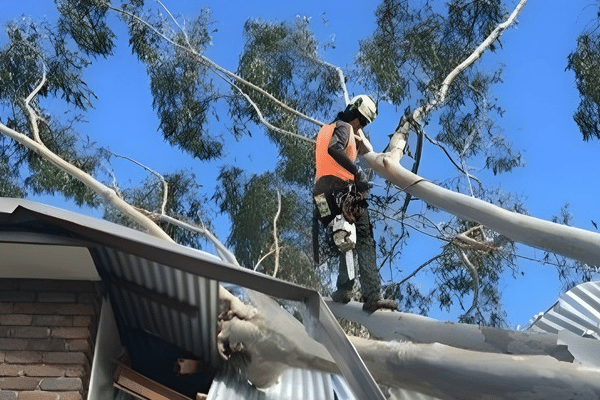
Tree removal after a storm is a complex process that requires specialized equipment and expertise. Some of the key steps in the process of storm damage tree removal include:
Safety measures: Before beginning any tree removal work, it’s essential to take appropriate safety measures to protect yourself, your property, and the people around you. This may include setting up barriers or warning signs, wearing protective gear, and using safety equipment such as ropes, harnesses, and helmets.
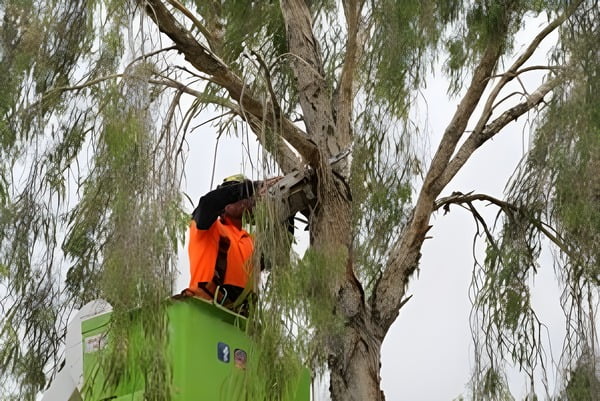
Equipment: Tree removal after a storm typically requires specialized equipment, such as chainsaws, ropes, and cranes. Depending on the size and location of the tree, different types of equipment may be needed to remove it safely and efficiently.
Cutting the tree: Once safety measures have been put in place and the equipment is ready, the next step is to cut the tree into manageable pieces. This is typically done using a chainsaw, but other tools such as wedges and a different size saw may also be used.
Removing the tree: Once the tree has been cut into pieces, it’s time to remove it from the property. This is typically done using a crane or other lifting equipment, which can carefully transport the tree pieces to a disposal site.
Disposal: Finally, the tree pieces must be disposed of in an appropriate manner. This may involve taking them to a landfill, recycling them, or using them for mulch or other purposes.
Overall, the process of tree removal after a storm is complex and should be carried out by trained professionals who have the necessary equipment and expertise.
Tree replacement after a storm
If a tree has been damaged or removed after a storm, you may want to consider replacing it. There are several factors to consider when choosing a tree to replace a damaged or removed tree, including:
Species: When selecting a tree to replace a damaged or removed tree, it’s important to choose a species that is well-suited to the local climate and soil conditions. For example, if the original tree was a palm tree, it may not be appropriate to replace it with a pine tree, as the two species have very different requirements.
Location: The location of the tree is also important when choosing a replacement tree. The new tree should be planted in a location that provides adequate space for its root system to grow and provides enough sunlight and water for it to thrive.
Size: The size of the replacement tree should also be considered. If the original tree was very large, it may not be practical to replace it with a tree of the same size. In this case, it may be better to choose a smaller tree that will be easier to manage and maintain.
The best option for replacing a tree after it has been damaged or removed will depend on a variety of factors, including the species, location, and size of the tree. It’s important to carefully consider these factors and consult with a tree expert or landscaping professional if you need advice on choosing a replacement tree.
Conclusion
Storm damage tree removal is an important issue on the Gold Coast, where severe storms can cause significant damage to trees. The consequences of storm damage can include falling branches, uprooted trees, and damage to property, so it’s important to be aware of the signs of storm damage and take action if you suspect that your trees have been affected. The process of tree removal after a storm is complex and should be carried out by trained professionals, who can safely and effectively remove damaged trees and dispose of them properly. If you need to replace a damaged or removed tree, there are several factors to consider, such as the species, location, and size of the tree.
If you’re concerned about storm damage to your trees, we encourage you to take action and contact the expert team at Pro Tree Works who can help you protect your property and maintain the natural beauty of the Gold Coast.
How to Prepare Your Trees for Storm Season
How to Prepare Your Trees for Storm Season
Storm season is upon us! With the recent storms, it’s important to know how to prepare your trees for the coming months.
In Australia, the storm season typically occurs from October to April with most floods, tropical cyclones, heatwaves, bushfires, and severe thunderstorms happening during this period.
We know you’re busy, so we’ve made this guide as concise and straightforward as possible.
First things first: if you have a tree service, call them now! They’ll be there in no time to help you get your trees ready for the storm. If not, don’t worry, we’ve got some great tips for how to prepare your trees for storm season on your own!
The first step is always to inspect your trees for any signs of disease, decay, or any other visible indications of structural weakness. This can include any dead or weak branches, discolouration of bark, rotting root systems, or wilting leaves. If you notice any of these issues, there is a risk that your trees could become a serious safety hazard during a storm. Not only is there a risk of the tree collapsing onto your property or vehicle, but weak and dead branches can become extremely dangerous projectiles in strong winds causing further damage.
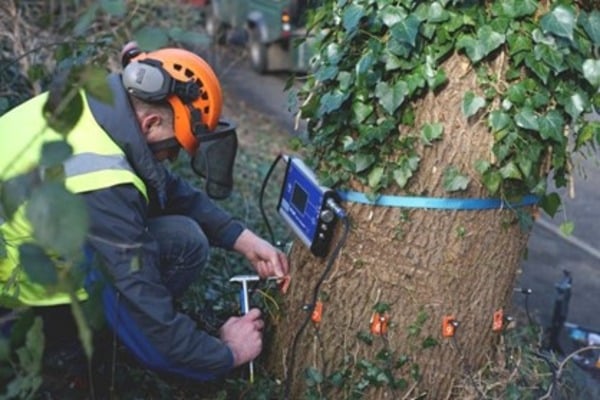
If you are unsure whether your trees are healthy, it is always advisable to consult a qualified arborist who can assess the condition of your trees.
Pruning and trimming
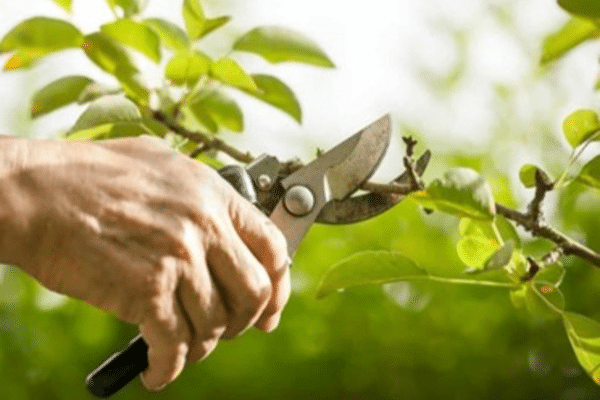
Pruning your trees at least once a year is a good practice to ensure they do not become overgrown and more hazardous to surrounding areas. Pruning and trimming should be done strategically and carefully. Lopping trees (removing large top sections of the tree) can make the tree less stable and is not recommended during storm season. Selectively pruning limbs and branches that are rotting, decaying, or dead can result in a stronger and more stable base. Trimming your trees can be effective if done correctly, which is why we recommend seeking the help of a qualified arborist to assist you with which areas require attention.
Remove hazards (dead trees and branches)
Tending to your tree’s health is important for storm season preparation, another crucial step for storm preparation is tending to your dead trees.
Inspecting your property for any dead branches, limbs, or debris and removing them before storm season can prevent the risk of further damage from strong winds and rain.
Anchoring your trees
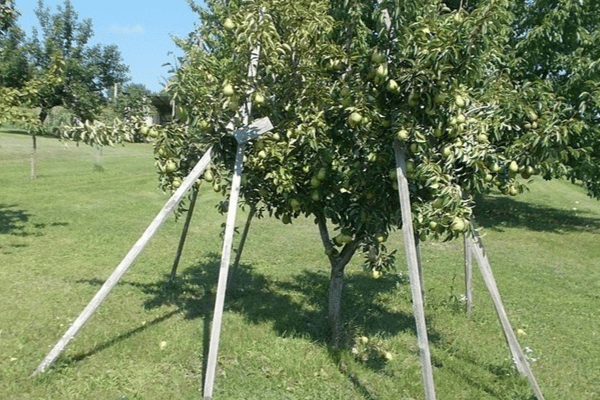
Anchoring your trees involves installing stakes around your tree and connecting them to your tree with rope or twine before a storm occurs. If done correctly, anchoring can make your trees more stable and prevent the risk of being uprooted or falling over during a storm. We advise not anchoring your trees too tightly. There should always be some slack to allow the tree to bend in the wind, anchoring too tightly can harm the stability of the tree. Additionally, you can use tree strapping or guying to provide extra support to the tree and prevent it from being uprooted by strong winds.
Cover and protect small trees
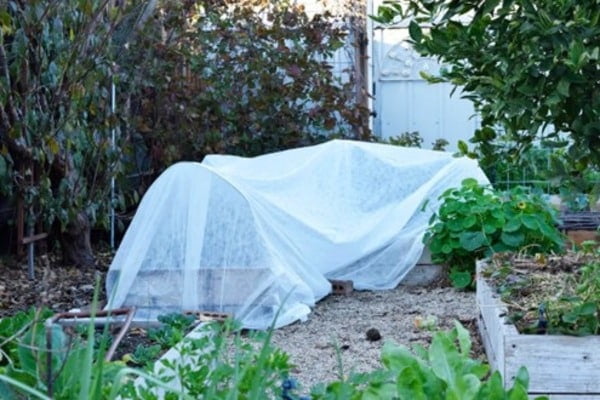
To protect small and juvenile trees during storm season it is recommended to construct a protective cover around them before a storm hits. To do this you should install stakes around the tree and cover it with either tarpaulin, burlap, or ideally, a row cover. This is not recommended for large and mature trees. For juvenile trees, it is important to remove the bindings after the storm has passed to not stunt the growth of the tree.
Fertilise and mulch your trees
The best defence for your trees during storm season is making sure they are healthy and strong.
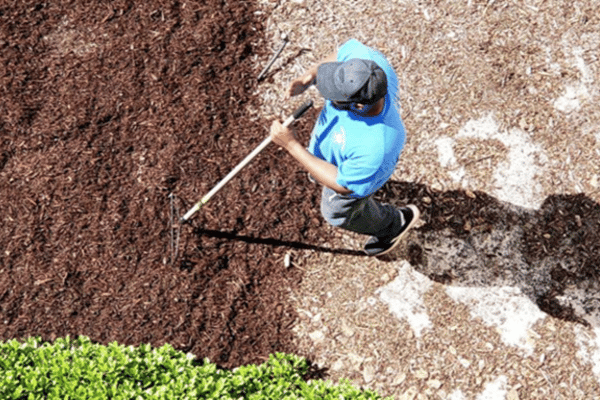
If you have had any excavation or construction work done near your trees, the soil system may be weak and unstable. A weak soil and root system can significantly increase the likelihood of your trees falling or being uprooted during a storm. Regularly watering and fertilising your trees can assist in strengthening root systems and reinforcing the stability of your trees. Similarly, mulching the base of your trees helps lock moisture into the soil and prevents soil erosion around the root system.
Look out for overhanging trees and powerlines
One thing to keep an eye on during storm season is any overhanging branches or limbs that are within close proximity to powerlines and roofs. Branches hanging over your roof not only present a potential danger to your home if they break or fall, but they can also clog up gutters and downpipes. This can create a fire hazard for electrical or bushfires and inhibit proper drainage during heavy rains.
Trees near power lines present a serious risk of power interruptions, electrocution, and electrical fires. If any of your trees or branches are close to powerlines, you should contact a professional arborist immediately.
Do I need council approval to prepare my trees for storm season?
Before you begin trimming and chopping down trees, there are some details you must consider.
Do you live near a river or a waterway?
Is the tree a native or protected species?
Are there native animals nesting in the tree?
If you are unsure about any of these questions, you could risk being fined by the local city council. Certain species of trees and the surrounding environment of your property are important factors to consider when trimming and removing trees.
Pruning and removing trees near powerlines and unstable branches can be extremely dangerous without the correct equipment.
Save yourself from injury and a potential fine by contacting a qualified arborist who can assess your property and remove any trees that could be a problem during storm season. The professional team at Pro Tree Works are the #1 Arborist’s on the Gold Coast and have years of industry training and experience with the Queensland storm season. They can take preventative steps to ensure your family and home are safe from the potential dangers of storm season. Feel free to give them a call on 1800 004 656 or you can get a quote anytime.
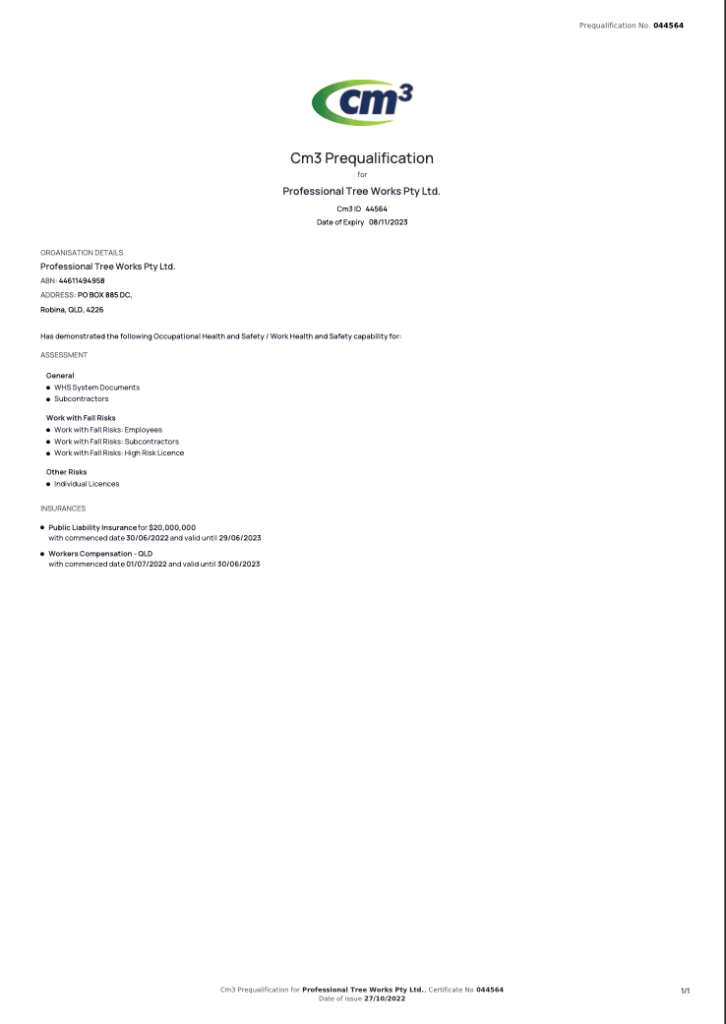
Pro Tree Works CM3 Certified
Best on the Gold Coast!
Best on the Gold Coast!
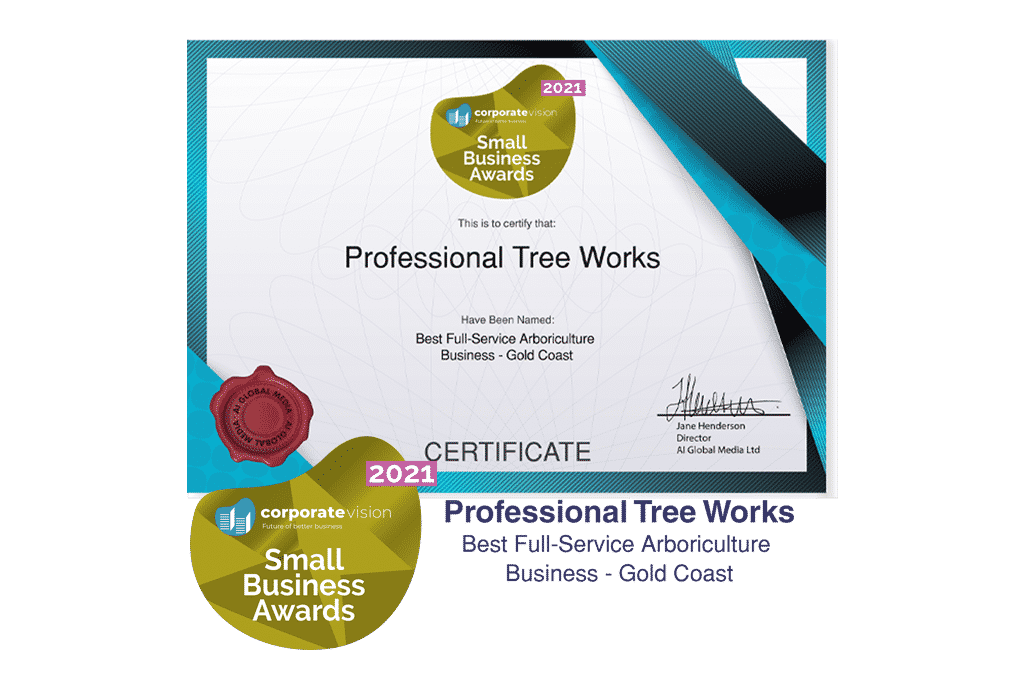
We are very proud to announce that Professional Tree Works were awarded ‘Best Full Time Arboriculture Business – Gold Coast’ at the recent 2021 AI Global Media Corporate Vision Small Business Awards.
Who is responsible when a tree falls on your property in Queensland?
Who is responsible for damage caused by falling trees?
Insurance, there’s always fine print that nobody reads, it’ll get you. We pay so much money every year for various types of insurance but the smallest discrepancy on our behalf and you probably won’t get a chance to say goodbye before they hang up.
The definition of insurance is:
Insurance
noun
an arrangement by which a company or the state undertakes to provide a guarantee of compensation for specified loss, damage, illness, or death in return for payment of a specified premium.
“many new borrowers take out insurance against unemployment or sickness”
a thing providing protection against a possible eventuality.
“jackets were hung on the back of their chairs, insurance against an encounter with air-conditioning”
“Provide a guarantee of compensation for specified…” “possible eventuality”, there are multiple ways these statements can be read. When it comes to a tree falling over in a storm, there is a lot more involved when it concerns your insurance policy regarding damages. It’s worth going over your policy.
With the passing of Tropical Cyclone Oma, insurance companies must be receiving hundreds of calls regarding fallen tree claims.
If a tree has fallen onto my neighbour’s house, am I liable or my insurer?
Your insurance company must consider a number of factors prior to making payments, such as:
Is the tree near a boundary
Is the tree in a dangerous condition
Is the tree type known to drop branches
Is the tree health
Ever heard the term “Act of God”. If a healthy tree has fallen over and caused damage to your house, provided you have home and contents insurance, you’re in luck. There is no liability and you will be covered, however, if the tree is “unhealthy” or a species renowned to drop branches, regardless of your insurance type and status, you’ll be covering the cost.
If the tree is near a boundary and you were aware of how unsafe it is, you’re liable. In the Gold Coast and Brisbane regions, Gum Trees are known for dropping massive trunks. If your property has Gum Trees, it would be worth having an arborist check your trees on a regular basis. They can inform you of any unhealthy trees within your vicinity. Contact us today to contact a tree inspection.
How about property damage? If a tree falls from your yard and damages your neighbours’ fence, you are liable for 50% of the fence repair, and your neighbour is liable for the other 50%. If the tree damages your neighbours home, your home and contents insurance will cover repair costs. Home and contents insurance will cover you for legal liability up to $20 million, including death, injury, or property damage from a third party.
A tree has fallen over and hit my parked car on the street, who is liable?
Provided you have comprehensive car insurance, your car will be repaired but you are liable for the cost to remove the tree. If however, you are parked illegally there will be a few more hoops to jump through which may result in an unpayable claim.
Don’t leave it to chance, act now.
Read your insurance documents, get your trees inspected or removed, and have a chat with your neighbour. You might have home and contents insurance but do they? You don’t want to be paying upfront costs or forever chasing somebody for damages to your home or property.
Needed a tree removed? Let us take care of it for you. We are fully qualified, reliable, tree removal gold coast service provider, and offer competitive rates. Contact Professional Tree Works for any arborist work on the Gold Coast for a free quote or assessment. Remember, being proactive won’t just save your property, it may save someone’s life.
Safe tree program (Guide)
This is a safetree guide that shows you how to planting within your property ‘powerline friendly’.
Trees and palms that interfere with power lines and safety risk and can interrupt your electricity supply.
You can help avoid the future need for trimming or removal of trees near powerlines by planting away from powerlines, or by planting ‘powerline friendly approved’ plants – which you can identify easily at your local nursery by looking for plants that carry the safetree symbol.
‘Powerline friendly approved’ plants are those that will not grow to within two metres of the main power lines that run along the street.* When it comes to the service lines that connect to your home, the heights vary, so your planting should vary accordingly. Some safetree species grow to four metres in height. Be aware of the power lines around your home when you position your plants and make sure you check the height they will grow to in maturity.
from tree removal to tree trimming to tree pruning, we can do it all. No job is too big or too small. our team of experts is made up of highly experienced professionals that can handle any job.
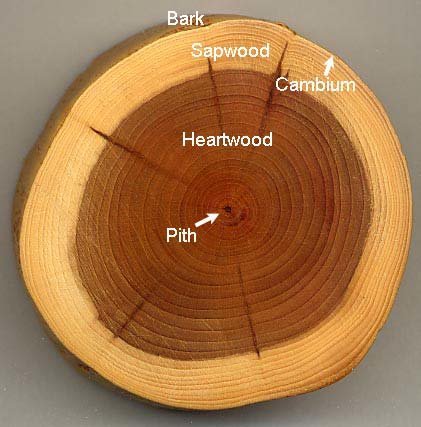
Cross Section of a Tree Trunk (Infographic)
Bark
The outside layer of the trunk. The bark serves as a protective layer for the more delicate inside wood of the tree.
Cambium
The thin layer of living cells just inside the bark. This part of the tree makes new cells allowing the tree to grow wider.
Sapwood
A network of living cells that bring water and nutrients up from the roots. When the inner layers of sapwood die they become heartwood.
Heartwood
Heartwood is dead sapwood in the centre of the trunk – giving the tree support and strength. It is usually darker in colour than the sapwood and is the hardest wood of the tree.
Pith
The tiny dark spot of spongy living cells is the centre of the tree which carries nutrients up to the rest of the tree – it is also called the heart of the tree. It is the most important, which is why is the most protected.
Pandanus tectorius
Pandanus (P. tectorius) is a large shrub or small tree of immense cultural, health, and economic importance in the Pacific, second only to coconut on atolls. A highly variable species complex, it grows wild mainly in semi-natural vegetation in littoral habitats throughout the tropical and subtropical Pacific, where it can withstand drought, strong winds, and salt spray.
In Brief
Distribution: Native through the Pacific islands and parts of Southeast Asia and northern Australia.
Size: Reaches 4-14m (13-46ft) in height, with about the same canopy diameter.
Habitat: Usually elevations of sea level to 20m (66ft), but can grow at elevations of 600m (1970ft) or higher.
Vegetation: Associated with species of coastal forest.
Soil: Adapted to a very wide range of light to heavy soil types.
Growth rate: Stem growth is slow to moderate, 2 – 80cm (0.8 – 31in) per years
Main agroforestry uses: Coastal protection, windbreak, home gardens.
Main uses: Food, weaving, thatch.
Yields: 10-300 leaves per tree per year or 9 – 12 fruits.
Inter cropping: Often planted in and around mixed agroforest in the Pacific.
Invasive potential: Naturally spreads into coastal plant communities. Since it is native to Pacific island, the tree is not considered to be invasive.
Pandanus trees are under threat from a tiny pest in Queensland.
This pest has been in pandanus palms for decades, however, the specialists have seen leaf hopper (Jamella australiae) increasing in numbers in recent years. It has been acting on the Gold Coast and Sunshine Coast where dead and dying palms have been pruned and even cut down to protect public safety.
For detailed information on the Pandanus Tree, you can also look at the PDF below:
Preparing For Storm Season 2018 / 2019
Before the Storm… How to Prepare When preparing for storm seasons
The summer (between December – February) is a season of storms in Gold Coast, the tropical storms are common in the late afternoon. To be prepared and to prepare the trees close to your property we created this post with helpful tips.
‘get ready’ for storm season
To help you the government of the City of Gold Coast created a webpage with a bunch of information to ‘get ready’ for storm season. You will find there a bunch of information divided between:
Have your trees inspected regularly (e.g. every two years) so that any problems can be addressed early and at a time that suits you. A qualified and experienced arborist can do this efficiently and economically.
Look for potential hazards
Look for potential hazards and investigate the condition of your trees. You or a qualified arborist should look for damage such as:
cracks in the trunk or major limbs;
hollow,
ages and decayed trees;
hanging branches;
improperly formed branches;
one-sided or significantly leaning trees;
and branches that may come into contact with the house.
Know your tree
Some species are more prone to storm damage. You should have a qualified arborist evaluate your trees for hardiness and resilience. Being aware of trees which may succumb to harsh weather conditions will help you decide if you want to replace these potentially dangerous species.
Do not top or lop your trees
Untrained individuals may urge you to cut back or lop all of the branches, on the mistaken assumption that it will help avoid breakage in future storms. However, professional arborists say that topping, the cutting of main branches back to stubs, is extremely harmful and unhealthy for your trees. Re-growth will be weakly attached branches that are higher and are more likely to break when a storm strikes. Also, topping will reduce the amount of foliage, on which the tree depends for the food and nourishment needed for re-growth. A topped tree that has already sustained major storm damage is more likely to die than repair itself.
Protect your assets
Trees may increase property value by up to 15% or more. Find out if your homeowner’s insurance will cover any damage your landscape may sustain due to natural causes and include the total value of your trees when listing your assets for coverage. A qualified arborist can provide an estimated value by inspecting your trees.
Trees are dynamic living things that require proper care. Hiring a qualified arborist who can assist you with pre-storm inspections and post-storm repairs can help avoid unnecessary loss of your trees.
Tree services
Pro Tree Works can offer you tree services such as:
All services are provided by a team of dedicated and skilled workers for any tree care need. You can hire us for services in anywhere in Gold Coast and around areas.
8 thoughts on “Preparing For Storm Season 2018 / 2019”
Jem Designs Dance wearsays:Your site is incredibly informarive, thanks!
Gold Coast Council Tree Removal Application Guide – Gold Coast Council
If you want to remove trees on the Gold Coast then you need to receive council approval. The reason is simple, the Vegetation Management Code handles the tree and vegetation preservation within the city. We love trees and it would be terrible if everyone decided to cut down all of the trees on their property. The idea is to protect all vegetation found in private as well as freehold lands. Tree removal in Gold Coast is possible only if you get council approval, and it’s a good idea to understand what that includes. If you are unsure if you need a permit, keep on reading or you can give us a call and we will happily help you.
City Plan, in very specific circumstances, permits damage to vegetation without making application to the City of Gold Coast. These instances are known as accepted development subject to requirements. The Vegetation management code within City Plan outlines the required outcomes. If you are unsure if you meet the necessary requirements, please read the following documents below.
Gold Coast Council approval to cut down trees on your own property
Council Tree Removal is possible whenever you need to damage or remove any protected vegetation. As long as you send the application and it’s approved, you will have no problem completing this process as fast as possible. Alternatively, once you have your application approved, you can contact us for your tree removal needs. That being said, there are some things to keep in mind here. The tree location, size, and condition are pivotal for this entire process.
It’s also important to know some other factors here such as the tree species, its height, and the trunk circumference, as well as the distance from your home or any other structure out there. Every little detail counts here. Trees can be dangerous if proper precautions are not used. If there are any dead branches, that could potentially fall and harm someone, it is important to take proper action.
The following vegetation and tree removal checklist provide guidance where vegetation damage will be considered accepted development which can be undertaken without the City’s approval and does not require an application for Operational Works (Vegetation Clearing), or in other words an application to remove or damage the vegetation. Residents must note that any vegetation clearing must not result in harm to native wildlife. Where native wildlife is present in vegetation to be removed, it is recommended that a licensed spotter catcher be employed to oversee the removal works.
Gold Coast Vegetation and Tree removal Application checklist
1. Previously approved Landscape Plan over your property 2. Damage/removal of vegetation along an existing property boundary fence, or a proposed new fence. 3. Damage/removal of vegetation that is close to a building? 4. Damage/Removal of vegetation that is close to my pool fence? 5. Removal/damage of vegetation that is part of the native under storey? 6. Does the vegetation require removal because it is interfering with the lawful operation of an established agricultural business or animal husbandry business? 7. Is the tree hazardous and/or dangerous? 8. Does the vegetation fit within the Pest Species definition?
You will need a permit if you answer yes to any of the following questions, the appropriate application will be required to be submitted to the City for assessment.
• Is the vegetation greater than 4 metres in height; or • Is the vegetation equal to, or in excess of 40 centimetres in girth (circumference) measured at 1.4 metres above the ground level; or • Is the vegetation remnant vegetation and its native under-storey as identified on the Vegetation Management Overlay Map; or • Is the vegetation disturbed/re-growth/wetland vegetation and its native under-storey as identified on the Vegetation Management Overlay Map
Steps to focus on when you want to get council tree removal approval
Once you know the type of tree you are working with and the reason why you need it removed, it’s important to understand the gold coast city council tree preservation document. Every neighbourhood and region comes with its own set of rules when it comes to tree removal on the Gold Coast. The TPO will let you know if you really need to file the application or not, so try to keep that in mind if possible.
We recommend you to hire a professional tree removal company (like Professional Tree Works) if possible. They will make it easier for you to complete the process properly as long as you receive the council agreement for Gold Coast tree removal. A professional arborist will know the proper way to remove that tree from your property without causing any damage.
General Tree removal Tips
You need to make sure that the council tree removal application is complete, otherwise, it will not be accepted. If you need to submit anything else, that will cost extra. .Again, working with a professional is the right approach because you can access all the necessary services and spend much less than you would imagine.
Normally the council will require you to plant another tree once you remove a tree from your property. A good arborist will be able to provide you with proper assistance in such a situation. The idea is to know exactly what you are getting into and focus on getting the best results. Our company offers outstanding tree removal services, so if you have a council approval, you should consider getting in touch with us. We are always here to help, and we offer high-quality services at a very good price!
Here are some more Tree Council Applications & Resources to assist you
The below resources will assist you in Tree Council Applications and many other resources to help you plan and execute your tree services requirements. Tree Clearing applications start at $240 for 1-30 Trees (see Information Sheet Prices) and need to be submitted to:
PO Box 5042 Gold Coast MC QLD 9729 Ph 1300 465 326
Please download any of these documents you like and contact us for any additional information.
 Jem Designs Dance wearsays:

 Reegansays:
 Mitchsays: